
How to write a novel in 3 months Wait, but… why?

When you’re doing research about writing a book, it seems like we have to write a novel in 3 months.

I totally did it, by the way. Wrote a novel in 3 months. It’s a middle-grade/tweens novel, 52 000 words long, or it will be when I am done with the second rounds of revisions.

I am proud of that novel, but… I am exhausted !

Why write a novel in 3 months?

In my case, I wrote a novel in 3 months because I noticed that a publisher was seeking contemporary middle-grade/tweens novels. So that is what I wrote, and wrote fast, for that window will not be open forever.

The publisher might not buy my book (here, in my little North-American francophone bubble, no literary agent; us, writers, are solo player by default) but I least I can say that I tried. Plus side, it was such a joy to write.

Still, I am exhausted. I am a slow writer, a slow reviser, a slow type of gal in general.

Although the end result is a fun book I am proud of, writing a book in 3 months is not my cup of tea.

If it’s not for a professional requirement; if it’s not to prove yourself that you can finish a novel or what have you, I am here to tell you: don’t bother trying to write a novel in 3 months.

Instead, make good art. That is what I will focus on.

Money, the name of a tired game

I dream of being able to earn a living as a traditionally published author. Yes.

Here’s a dirty little secret though: I don’t want to be rich.

I want my books to be enjoyed by as many readers as possible. I want to be able to buy food, clothes and finish paying the house.

See, money is a depressing reality that makes the entire world miserable, and has made the world miserable for millennia. Money and guns and bombs. But I digress.

There is no guarantee what so ever that if you write a novel in 3 months, you’re gonna get published and hit the bestsellers list. No guarantee what so ever.

Why put yourself through on a rough, though working path for money.

Writing books is not a highway to millionaire-land (what a sad land that is, a bunch of people that could help feed half of the children dying of hunger every day with their pocket change *sigh*). Forget it.

Make good art

The words of Neil Gaiman not only touched my heart. They found a place in my soul.

Make good art, write the best stories to make readers dream and hope, that is my now my goal.

I hope this post helped you take that pressure off your writer’s shoulders.

There’s enough characters problem to think about as it is.
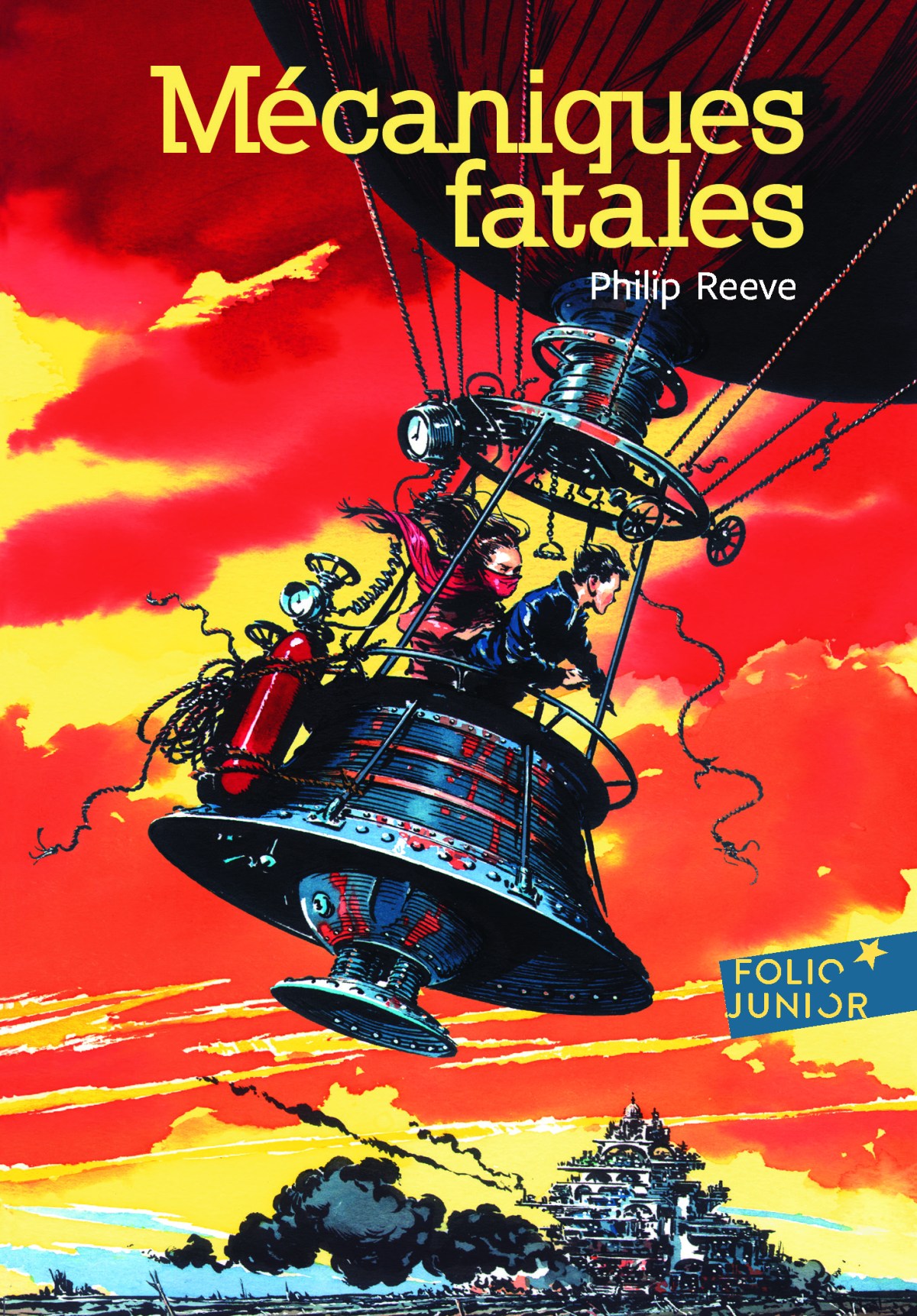
Book of the week: Mortal Engines

Let me catch my breath

What a fast pace novel, that one. Sooo fast, I’m glad I purchased #1 and #2 at the same time.

It’s a good book, perfect for kids and tweens who actually don’t like to read or find it a long, boring, pointless exercise. You ain’t gonna have time to be bored with that one, m’dear young reader!

I really enjoy it. I will read all four. That being said, I feel like I have no choice but to read the whole series, not only because it’s good, but because I am dying to know what will become of the main characters.

Clever author Philip Reeve makes sure to hook the readers, with his harsh and wonderful dystopian universe and complex characters.

No wonder the book became a massive movie thing, every scene in every chapters reads like a movie. Everything is to the point. From the emotions the characters go through to the descriptions of the complex mecha, no word is superfluous.

No time to waste anyway. Even if you wanted to rest a little with the character in the beautiful place they reached, and have a longer look around, you can’t.

And, that’s exactly why, you know, I liked the book buuut.

So much hastiness!

The art of pacing

Philip Reeve gives us a fast-paced story, which works great for everybody, especially people who, like I said, don’t like books to begin with, or have a lot of other books to get to, aged from 11 and beyond.

In a universe where who could easily spend several chapters to describe one place since there’s so much that could be said about it – great worldbuilding, by the way, a beautiful masterpiece of worldbuilding, well delivered – a fast-paced story is crucial.

Still, sometimes, the story cuts short.

Some details are, sometimes, given at random just so the story can move along. The same goes for the unraveling of a supposedly super well-buried secret a character suddenly puts together and voilà, moving on.

Mortal Engines, was first published in 2001. It is a great #1 to this fast-paced quartet by the excellent Philip Reeve, a prolific UK author.

I read the book in French. Published by Gallimard and translated by Luc Rigoureau, Mécaniques fatales as one flaw that kept putting me off: the translation of the names.
When it comes to names, I understand one can’t just leave the names untouched and explains the meaning in footnotes all the time… but one should.